Can You Drink Alcohol With CKD?
April 30, 2026
Can You Drink Alcohol With CKD? Drinking alcohol can be done safely in moderation, even if you have chronic kidney disease (CKD), end stage renal failure (ESRF) – or diabetes. The recommendation...


A Patient Information Guide
Your blood tests help your kidney team monitor how well your kidneys are working and identify any problems early. The information below explains the most common kidney blood tests and what they mean.

The eGFR estimates how well your kidneys are filtering waste products from your blood. It is calculated using your creatinine level, age and gender. Note:
Typical normal ranges (depends on gender and muscle mass):
Creatinine is a waste product produced by your muscles. Healthy kidneys remove creatinine from the blood.
As kidney function deteriorates, the kidneys become less able to remove creatinine, so the blood level rises. Hence it is raised in CKD and AKI.
Your kidney specialist will look at your creatinine together with your eGFR rather than in isolation.
Normal range: 2.5–7.8 mmol/L
Urea is a waste product, produced by the liver, when your body breaks down protein from your diet. Healthy kidneys remove urea from the blood.
A raised urea level (like creatinine) usually indicates CKD (or AKI); although it can also be affected by dehydration, diet and certain medication.
Normal range: 22–28 mmol/L
Your kidneys help maintain the correct acid-base balance in your blood. Bicarbonate is a measure of this balance.
As kidney function declines, bicarbonate levels fall, when the blood becomes more acidic.
If your bicarbonate level is low, your blood is too acidic; and your kidney doctor may prescribe sodium bicarbonate tablets to help correct it.
Normal range: 3.5–5.0 mmol/L
Potassium is an important mineral found in many foods. Healthy kidneys keep potassium levels within a safe range.
If your kidneys are not working well, potassium can build up in the blood. High potassium levels can affect the heart rhythm and, in severe cases, may be life-threatening.
If your potassium is high, your kidney team or dietitian may recommend a low-potassium diet or other medication (including diuretics and Lokelma).
Normal range: 0.8–1.4 mmol/L
Phosphate comes from your diet and is normally removed by the kidneys.
When kidney function declines, phosphate levels can rise. High phosphate can cause:
Treatment may include a low-phosphate diet and phosphate-binding medication (like calcium acetate).
Normal range: 2.2–2.6 mmol/L
Calcium is essential for healthy bones, muscles and nerves.
Calcium and phosphate work closely together, so when phosphate levels rise, calcium levels may fall. Maintaining the correct balance is important.
Normal range (varies lab-to-lab): 1.0 to 6.5 pmol/L (10–65 pg/mL)
PTH is produced by four small glands in your neck. It helps regulate calcium and phosphate levels and keeps your bones healthy.
When calcium is low or phosphate high for a long time (as can happen in CKD), the parathyroid glands produce more PTH. Persistently raised PTH can weaken bones, which eventually causes bone pain and fractures..
Target range (varies depending on CKD stage): Approximately 15–30 pmol/L (your kidney specialist will advise your individual target).
Diet, phosphate control and medication (e.g. alfacalcidol, an activated form of vitamin D) can help reduce PTH levels.
Normal range (measured as 25-hydroxyvitamin D, or 25(OH)D)): 50-75 nmol/L (20-30 ng/mL)
Vitamin D helps your body absorb calcium and maintain healthy bones. As kidney function declines, the kidneys are less able to activate vitamin D, which can contribute to weak bones and higher parathyroid hormone (PTH) levels.
Some people with CKD may be advised to take vitamin D supplements (or Alfacalcidol) to help boost vitamin D levels, maintain bone health and control PTH levels.
Normal range (people without diabetes): 20–41 mmol/mol
HbA1c measures your average blood glucose level over the previous 2–3 months.
If you have diabetes, keeping your HbA1c within your target range helps protect your kidneys and reduces the risk of diabetic kidney disease progressing.
Your GP or diabetes team may recommend a different target depending on your individual circumstances.
Normal haemoglobin ranges:
Haemoglobin is the protein in red blood cells that carries oxygen around the body.
Healthy kidneys produce a hormone called erythropoietin (EPO), which stimulates the bone marrow to make red blood cells. As kidney function declines, less EPO is produced, which can lead to anaemia.
Symptoms of anaemia include:
For most people with CKD receiving treatment for anaemia, the target haemoglobin is 100–120 g/L. Treatment is usually given when the Hb is under 100 g/L.
Treatment may include iron infusions/tablets – and/or erythropoietin (EPO) injections (e.g. Darbepoietin)/tablets (Roxadustat) – depending on the cause of the anaemia.
Normal range: 41 – 400 ug/L
Low: Less than 15 ug/L
Borderline: 16 – 40 ug/L
High: Greater than 400 ug/L
Ferritin is a protein that measures how much iron you have stored in your body. Kidney patients need more iron than other patients to encourage normal blood production. If levels are low or low-normal (under 100 ug/L), iron tablets or an injection, should be considered.
Target ferritin in CKD patients is 200-500 ug/L.
Blood Pressure
Blood pressure is not a blood test but it is measured every time you see a kidney doctor. It is that important.
There is no such thing as normal blood pressure. There is a normal range, usually taken to be approximately 90/60 – 135/85.
What is normal depends on many factors especially:
High blood pressure damages blood vessels throughout the body, including those in the kidneys. Poorly controlled blood pressure can cause CKD to progress more quickly.
Target BP for most CKD patients is under 130/80 (or 120/70 if you have diabetes). Your doctor or nurse will advise you of your individual blood pressure target.
Taking your blood pressure regularly, and medication as prescribed, and reducing salt intake, can help lower BP and protect your kidneys.
Urinary ACR (uACR; Albumin-to-Creatinine Ratio)
Normal range: less than 3 mg/mmol.
Urinary ACR is also not a blood test. But is is often measured in patients with CKD. If its raised, it is a sign of an increased protein leak into the urine, which is an early sign of kidney damage.
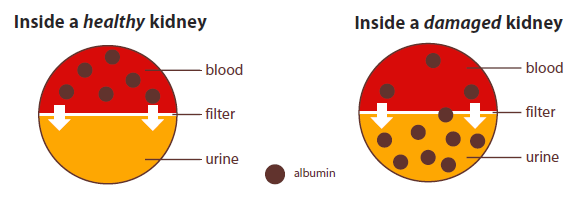
A lower number is better as it shows the kidneys are leaking little protein into the urine.
How Often Should You Get Kidney Blood Tests?
How to Monitor Your Kidney Blood Tests
To find out (and monitor) your own blood test results, MyHSN suggests you use an online platform called Patient Knows Best (PKB).
Can You Drink Alcohol With CKD? Drinking alcohol can be done safely in moderation, even if you have chronic kidney disease (CKD), end stage renal failure (ESRF) – or diabetes. The recommendation...
What are the 5 Principles of AKI Management? Medically Reviewed by Dr. Andrew Stein MD, Consultant Nephrologist (Hospital Kidney Specialist). Last updated: June 2026 Acute Kidney Injury...
Can Your GFR Improve? Understanding Kidney Function Changes Short answer = not usually. But sometimes, yes. Here is the longer answer. If you have been diagnosed with Chronic Kidney Disease (CKD) or r...
Specific questions to ask your doctor at your next CKD check-up Preparing for a kidney-related appointment can feel overwhelming, especially since the data (like GFR and ACR) can be technical. Here is...

